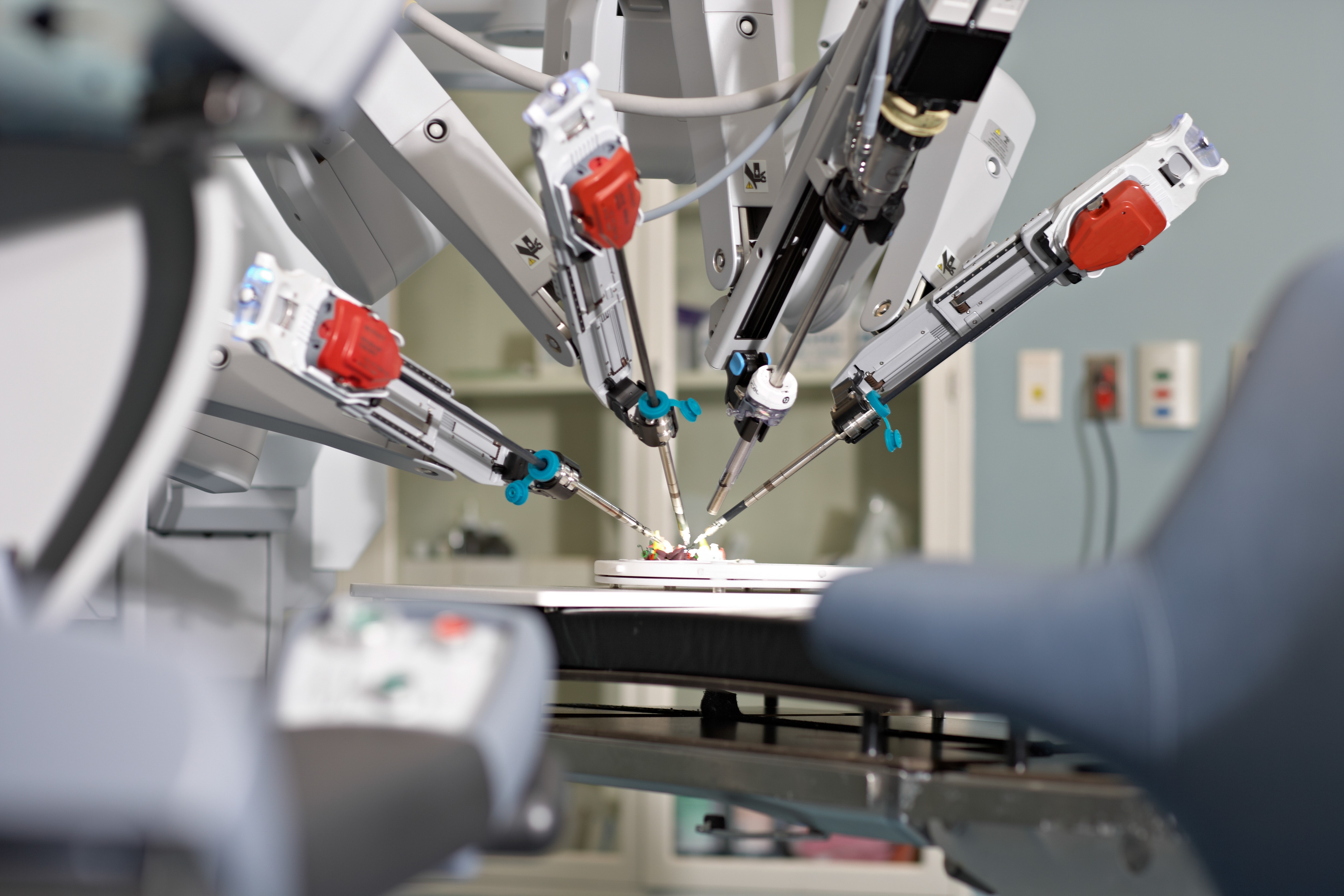

Precision Metal Components for Surgical & Minimally Invasive Devices
Surgical instruments are single-use or limited-use devices built to perform in an environment where there’s no troubleshooting and no second attempt. The mechanical requirements are fixed, the regulatory documentation must be complete, and the components must function correctly across every unit in a production lot.
Brunk has been in the surgical device supply chain long enough to understand what is required on the manufacturing side. We are ISO 13485 certified with in-house tooling and laser welding that keeps critical process steps off the vendor list and under our roof.

Surgical Stapler Components
Brunk manufactures precision-stamped components for laparoscopic, open, endoscopic, and circular surgical staplers, including anvils, cartridge hardware, and structural components. Every part is held to the tight tolerances a consistent firing sequence depends on. Our assembly operation ships sub-assemblies directly to OEM final assembly lines.

Clip Appliers and Ligation Components
Clip appliers and endoscopic instruments require small, precisely formed metal components that deploy reliably through a narrow instrument channel and function correctly on the first attempt. Brunk produces precision-stamped clips, springs, and formed components for clip applier and endoscopic instrument applications.

Advanced Energy Components and Devices
Bipolar contacts, RF conductive elements, insulator clips, and leaf springs, all held to the tolerances an energy-based device needs to seal consistently and stay electrically isolated where it has to. If your jaw design lives or dies on contact geometry, that's the part we make.

Orthopedic Instruments
Instrument components for minimally invasive orthopedic procedures. Programs in active development. Early-stage engagement welcome.

Materials
Stainless steel, titanium, MP35N, copper alloys, red metals and other conductive and structural alloys suited to sterilizable, high-cycle surgical and endoscopic applications.
The Machined-to-Stamped Case
Surgical instrument OEMs have machined certain components for decades because the assumption was that stamping couldn’t hold the spec. It can. The tooling investment is front-loaded, but the per-unit economics at volume make the math obvious fast.
60+ journeyman toolmakers who’ve been doing this a long time. In-house design support to validate the conversion before the first tool is cut. ISO 13485 quality systems running from prototype through production.