
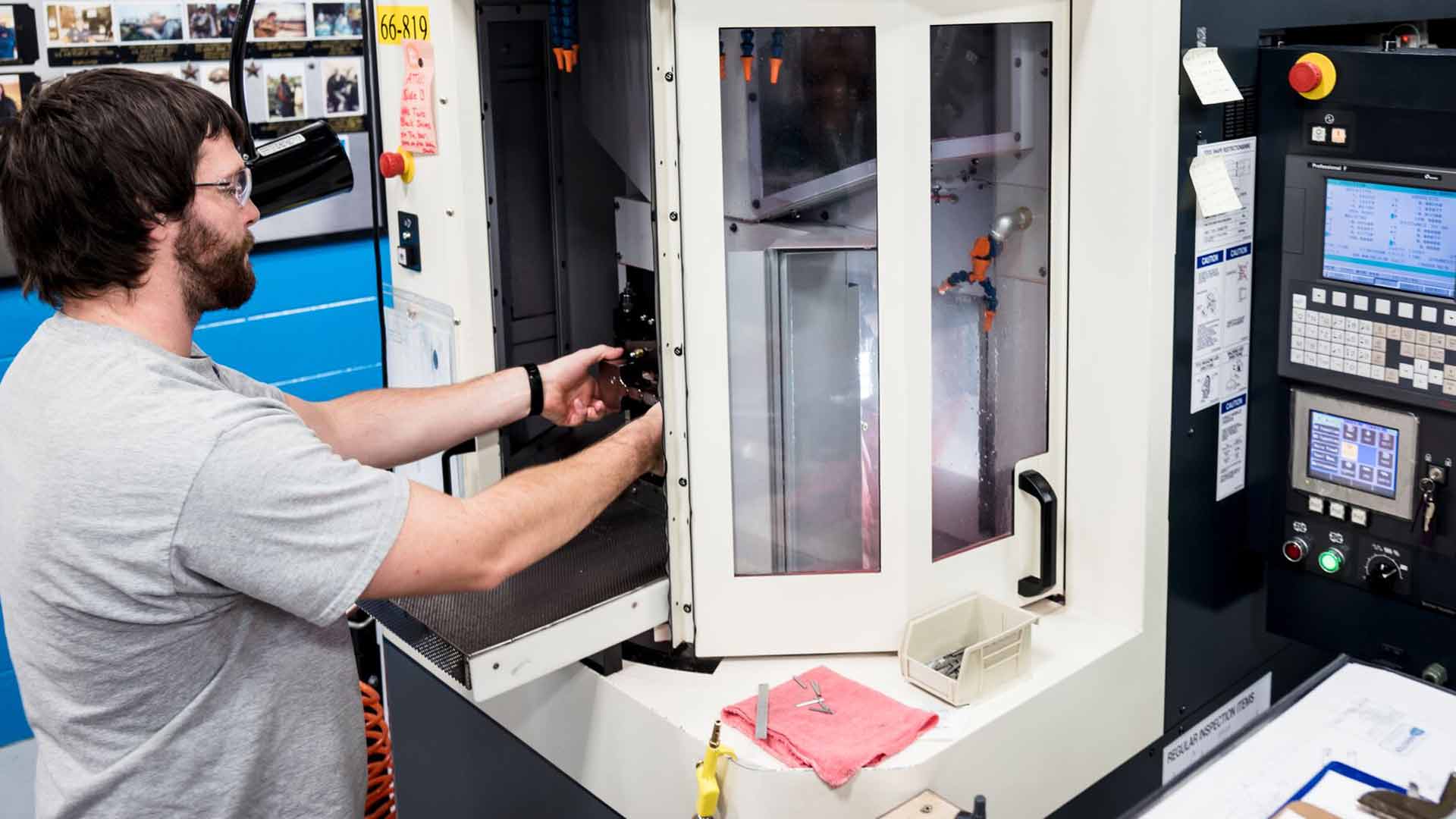
CNC Multi-Axis Machining
Brunk’s in-house CNC machining capabilities delivers fine tuned components to the exact characteristics and performance levels our customers demand. With state-of-the-art CNC machines in the hands of our metal craftsmen, we produce an exceptionally high level of finish that saves production time and improves quality.
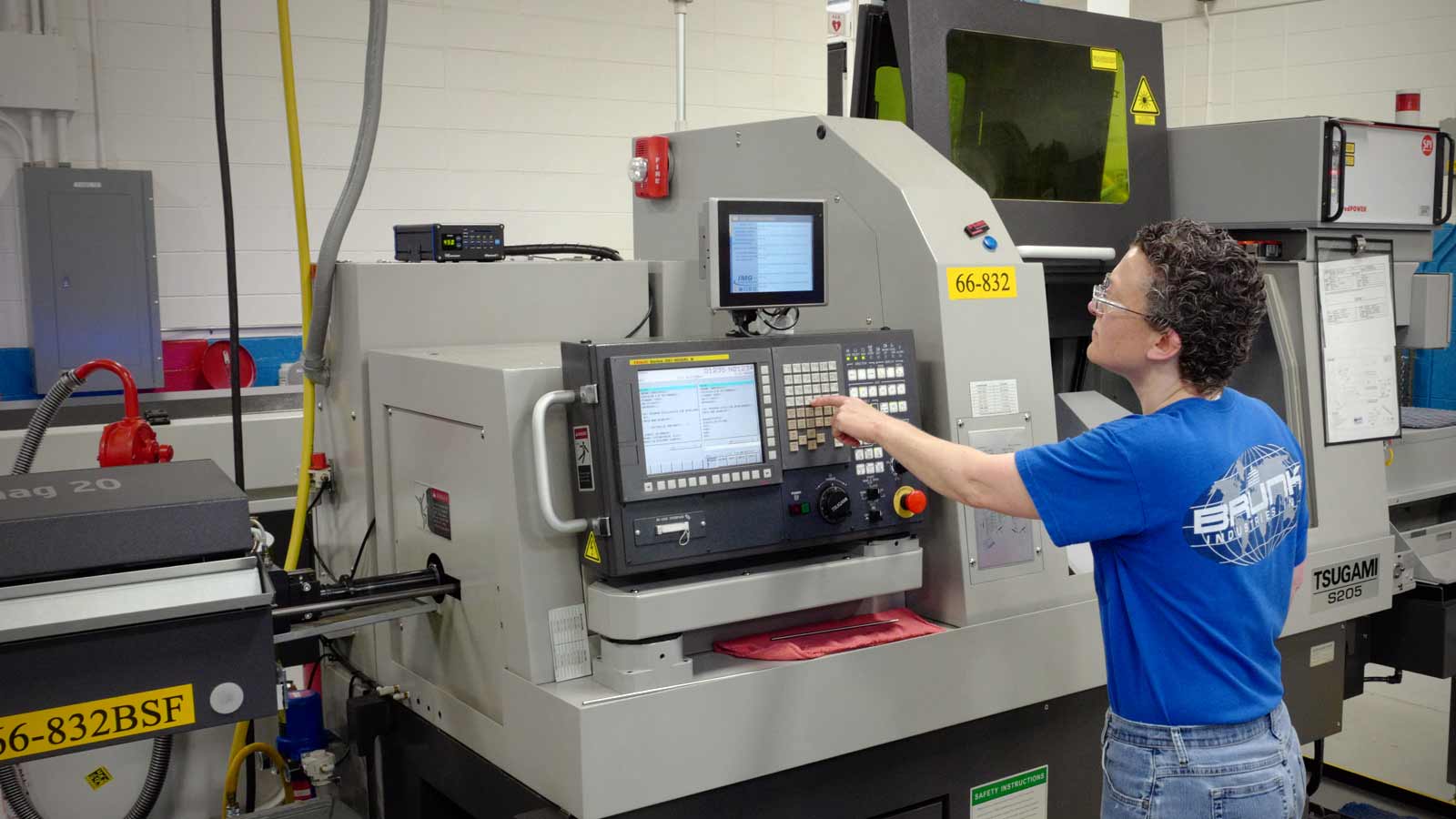
Multitasking Turning Center with Laser
Brunk’s machining capabilities include:
- Swiss Machining and Laser Swiss
- CNC turning
- Wire and Conventional EDM
- Water Jet Cutting
- Laser Cutting
- Laser Marking
Exploring CNC Machining: A Detailed Guide
In the modern manufacturing landscape, CNC machining has emerged as a pivotal technology, delivering precision, efficiency, and adaptability for producing complex components. CNC, short for Computer Numerical Control, revolutionizes the machining process by leveraging advanced technology to automate operations, significantly reducing human intervention while ensuring superior quality. This guide aims to offer an in-depth understanding of CNC machining, covering its core principles, machine varieties like the CNC router and CNC lathe, and the materials employed. Whether you’re an industry veteran or a beginner, this resource seeks to equip you with comprehensive knowledge about CNC machining and its extensive advantages, setting the stage for your upcoming projects.
Defining CNC Machining
CNC machining represents a manufacturing technique where computer software directs machine tools. This technology transforms computer-aided designs (CAD) into machine-readable formats, ensuring precise and uniform production. The essence of CNC machining lies in automating machine tools, such as mills, CNC routers, CNC lathes, and grinders, to execute tasks like cutting, drilling, and shaping materials with exceptional precision.
The distinction between CNC and traditional machining methods is primarily in automation and precision levels. While traditional methods depend on manual input and operator expertise, CNC machining uses programmed instructions, enabling machines to carry out complex tasks with minimal human involvement. This not only boosts consistency and repeatability but also facilitates intricate designs and geometries, challenging or impossible to achieve using conventional methods.
CNC machining’s applications are vast, spanning industries such as aerospace, automotive, and medical sectors. In aerospace, it produces lightweight, robust components compliant with stringent standards. In automotive, it ensures precise parts for vehicle efficiency and reliability. Additionally, CNC machining is crucial in manufacturing surgical instruments and implants, where precision is vital. Other sectors like electronics, consumer goods, and furniture design benefit from CNC machining’s adaptability.
Companies embracing CNC machining discover new ways to boost productivity and reduce lead times, enhancing manufacturing processes. Integrating CNC technology, including CNC routers and CNC lathes, into operations allows businesses to achieve high-quality results, meeting the demands of today’s competitive market.
Operational Mechanics of CNC Machines
CNC machining utilizes computer software to control machine tools, with primary components including the computer, controller, drive system, machine tool, and feedback system. The computer processes design files, while the controller interprets commands into precise movements. The drive system, consisting of motors and gears, powers the machine tool, executing programmed tasks with accuracy. The feedback system monitors tool position and movements to ensure proper operation.
Programming is crucial in CNC machining, with programmers using G-code to provide detailed instructions on machine movements, tool usage, and process operation. G-code can be generated manually or automatically through CAD and CAM software, enabling CNC machines, such as CNC routers and CNC lathes, to produce highly complex parts meeting exact specifications, essential for industries like aerospace, automotive, and medical device manufacturing.
The machining process begins with CAD design, converted into G-code, uploaded to the CNC machine. Operators set up the workpiece and select tools, initiating the machining process involving cutting, drilling, or milling based on programmed instructions. The CNC machine continuously monitors performance, making necessary adjustments for precision. Upon completion, the component is inspected for quality and prepared for further processes. This systematic approach enhances efficiency and minimizes errors, making CNC machining invaluable in modern manufacturing.
Categories of CNC Machines
CNC machining has transformed the manufacturing industry, offering precision and efficiency in various applications. Understanding CNC machine types is essential for selecting the right one for your project. Main categories include milling machines, CNC lathes, CNC routers, and laser cutting machines, each suited to specific processes.
Milling machines are versatile, rotating a cutting tool against a stationary workpiece to create complex shapes and features. They excel in producing parts with intricate designs, ideal for industries like aerospace, automotive, and electronics. However, they may be limited by workpiece size and tool path complexity.
CNC lathes, or turning machines, rotate the workpiece against a fixed cutting tool, effectively producing cylindrical parts like shafts and bushings. Known for speed and precision, they suit high-volume production runs but may struggle with non-cylindrical shapes.
CNC routers use high-powered lasers for accurate cutting or engraving, effective for thin materials like metals, plastics, and wood. Advantages include high-speed processing and intricate designs without extensive tooling, though limitations exist for thicker materials or depth-critical projects.
Specialized CNC machines include waterjet cutting machines for hard materials without heat and plasma cutting machines for high-speed metal fabrication. Each type has advantages and limitations, which should be weighed based on project requirements.
Choosing the right CNC machine, whether a CNC router or CNC lathe, significantly impacts manufacturing efficiency and quality. Understanding machine types and capabilities aids informed decisions aligning with specific needs.
Advantages of CNC Machining
CNC machining offers numerous benefits, making it a preferred choice for high-quality part production. Precision and repeatability are key advantages, with computer programs ensuring each movement and cut are executed accurately. This precision yields superior product quality and allows complex geometries unattainable through manual processes, meeting strict tolerances and specifications.
Automation reduces production time and costs, as once a design is programmed, the CNC machine can operate continuously, accelerating production cycles. This efficiency translates to lower labor costs, with fewer operators needed. Quick turnaround times enable faster market responses and reduced lead times, enhancing cost savings and resource allocation.
CNC machining minimizes waste generation. Traditional methods often result in significant material wastage due to manual processes. CNC employs software optimizing raw material use, reducing scrap and waste, contributing to cost savings and sustainable practices. This appeals to eco-conscious consumers and improves profitability.
Overall, CNC machining’s precision, reduced time and costs, and minimal waste make it a preferred choice for manufacturers seeking enhanced production capabilities. Leveraging CNC advantages, including the use of CNC routers and CNC lathes, improves operational efficiency and delivers higher quality products.
Materials Used in CNC Machining
CNC machining allows precise shaping and cutting of various materials, with selection impacting performance and durability. Common materials include metals, plastics, and composites. Metals like aluminum, steel, and titanium are chosen for strength, durability, and temperature resistance. Aluminum is popular for its lightweight and corrosion resistance, ideal for aerospace and automotive applications. Steel offers superior strength for heavy-duty uses, while titanium’s strength-to-weight ratio suits medical and aerospace industries.
Plastics provide flexibility and ease of processing, with polycarbonate, acrylic, and nylon favored for lightweight and impact resistance. These plastics are used in applications requiring transparency and good wear resistance.
Composites, combining materials for desirable properties, are increasingly used in CNC machining. Carbon fiber and fiberglass composites offer high strength-to-weight ratios, suitable for automotive and aerospace sectors needing reduced weight and maintained strength.
Material selection in CNC machining considers mechanical properties, thermal stability, corrosion resistance, and weight. For harsh conditions, corrosion-resistant stainless steel may be best, while lightweight components may benefit from aluminum or specific plastics.
Material choice impacts machining processes, with metals requiring robust tooling and slower feed rates compared to plastics. Specific considerations like coolant use may be needed to prevent overheating or warping. Understanding these nuances ensures efficient, cost-effective machining and high-quality products.
Getting Started with CNC Machining
CNC machining is crucial in manufacturing, offering precision and efficiency for complex part production. Aspiring machinists should acquire essential skills like mechanical understanding, attention to detail, and proficiency in reading technical drawings. Familiarity with CAD software is vital for translating designs into machine instructions.
Various educational paths exist for those pursuing CNC machining careers. Community colleges and technical schools offer programs with hands-on training using the latest equipment, including CNC routers and CNC lathes. Manufacturers may provide apprenticeships or on-the-job training for practical experience. Online courses offer flexible learning environments. These programs cover technical aspects, safety protocols, and industry best practices.
The CNC machining field offers diverse career opportunities, including positions as CNC operators, programmers, and machinists across industries like aerospace, automotive, and manufacturing. Demand for skilled professionals continues to grow, with opportunities for advancement into supervisory roles or starting machining businesses. CNC skills also allow transitions into related fields like quality control and product design, promising rewarding career paths.
Contact our sales team to discuss your next project.