
Surface Finishing
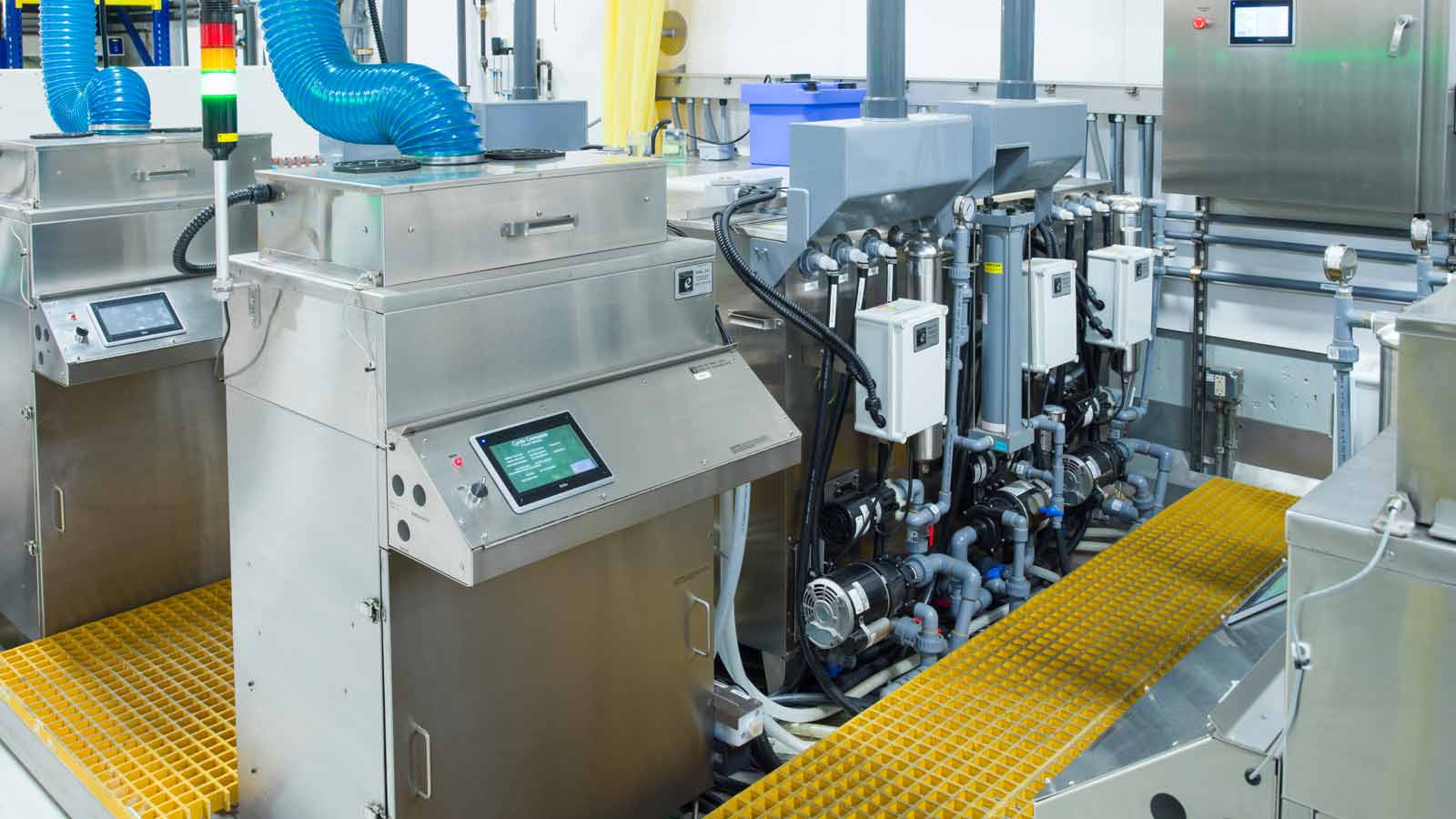
Brunk provides a variety of surface finishes including deburring, bead blasting, plating, passivating, laser marking, heat-treating, teflon coating, powder coating, electro-polishing, selective plating and continuous plating of preformed plates. We offer a wide range of custom finishes to suit your unique application.
Proven Expertise
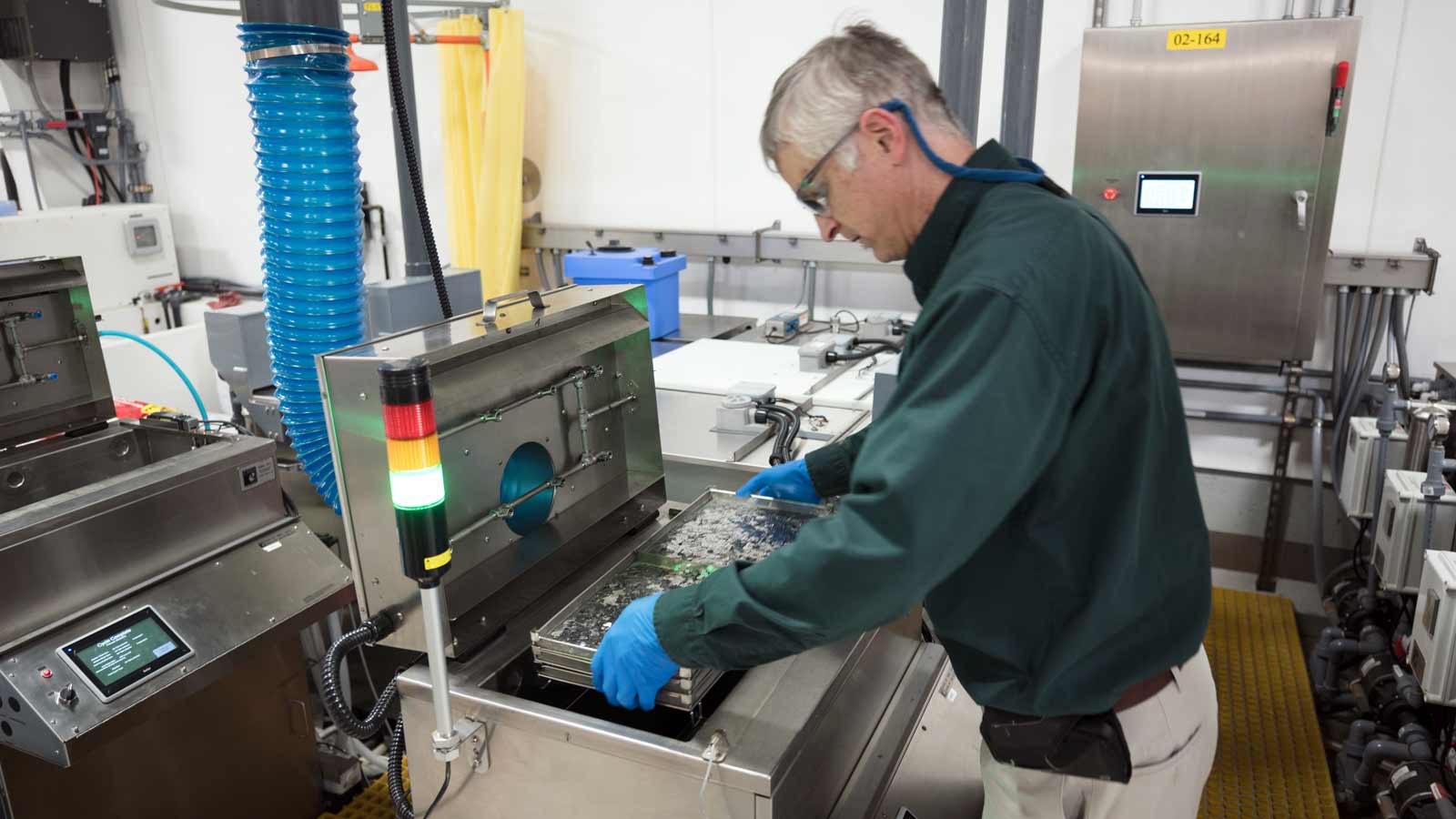
Brunk has the facilities and equipment to accomplish most finishing, assembly and secondary operations in-house, or through our certified subcontractors who meet our high quality standards.
Surface Finishing: Techniques, Applications, and Practical Benefits
Surface finishing is the final, precision-focused step that elevates a part’s performance, appearance, and service life. Whether the goal is to improve corrosion resistance, achieve tighter tolerances, enable reliable downstream processing, or deliver a premium aesthetic, the right finish can transform a component from acceptable to exceptional. At brunk.com, we support a broad spectrum of surface finishing needs for metals and plastics, helping manufacturers, engineers, and procurement teams meet specification-driven requirements with confidence. In the sections below—What Is Surface Finishing?, Common Techniques, Applications, Benefits, and Choosing the Right Finish—you’ll find clear, practical guidance to select, validate, and apply finishes that align with your performance goals, budgets, and timelines.
What Is Surface Finishing?
Surface finishing is the practice of modifying the outer layer of a material to achieve defined functional and aesthetic properties—such as smoothness, uniform appearance, corrosion resistance, and cleanliness. In manufacturing, the condition of the final surface directly influences product performance, durability, and user perception. Whether you’re increasing wear resistance, preparing parts for metal coating, or meeting strict dimensional and cosmetic standards, effective finishing ensures components meet the exacting requirements of modern production. Brunk delivers validated processes ranging from electroplating and selective plating to thin-film deposition and micro finishing, aligning each method to the substrate and use case.
Across industries, surface finishing underpins reliability and consistency. In aerospace, finishes help mitigate fatigue and corrosion under high stress and harsh environmental exposure. In medical and food processing, smooth, hygienic, and polish-ready surfaces support cleanliness and reduce contamination risk. Automotive and heavy equipment manufacturers rely on finishing to extend service life, lower friction, and achieve uniform cosmetic quality across high-volume production. Electronics and precision instrumentation benefit from tightly controlled surface textures and surface roughness that support conductivity, sealing, thermal management, and predictable assembly fit. For high-reliability assemblies, Brunk’s passivation, electroplating, and heat treating workflows are coordinated to deliver consistent outcomes.
Key objectives of surface finishing include improving functional performance (e.g., wear, friction, and corrosion resistance), refining aesthetics (gloss, color uniformity, and visual consistency), and ensuring compliance with specifications and regulatory standards. Finishing also prepares parts for downstream steps—such as bonding, painting, and coating—by establishing the right surface profile. At brunk.com, our solutions emphasize consistent, repeatable outcomes so manufacturers can achieve precise surface characteristics—such as surface roughness Ra (roughness Ra) targets and coating thickness—for reliability, safety, and efficiency in demanding environments.
Common Surface Finishing Techniques
Surface finishing encompasses mechanical, chemical, and advanced technologies designed to enhance performance, appearance, and durability across metal and polymer components. Mechanical methods—such as grinding, bead blasting, and polishing—remove imperfections, refine dimensional accuracy, and produce uniform textures. Bead blasting and micro finishing tune surface roughness and surface roughness Ra to specification, improving cleanliness and enabling dependable coating adhesion. Grinding employs abrasive media to hit tight tolerances and prepare parts for subsequent processes. Electrol polishing and controlled polishing elevate gloss and reduce surface roughness, improving cleanliness and corrosion resistance while meeting cosmetic standards. At brunk.com, these steps are tailored to each substrate and end-use requirement to balance throughput, cost, and finish quality.
Chemical finishing alters the surface at a molecular level to add functional and protective value. Passivation improves corrosion protection in stainless steels by enriching the chromium oxide layer. Anodizing forms a thicker oxide layer on aluminum, improving wear resistance and corrosion protection, with optional dyeing to deliver brand-consistent aesthetics. Electroplating—such as nickel plating, gold plating, silver plating, and palladium plating—deposits a controlled metallic layer to enhance conductivity, barrier protection, solderability, and appearance. Our process controls focus on bath chemistry, current density, temperature, agitation, and racking strategies to ensure consistent coverage across complex geometries and high-mix production runs. Brunk offers rack plating, barrel plating, reel to reel plating, and spot plating to meet varied part forms and production scales, with selective plating options that protect critical dimensions and target specific zones.
Advanced technologies are expanding what’s possible for precision parts. Thin-film deposition creates engineered metal coating stacks for electrical, optical, and barrier performance. Laser-based finishing can selectively texture or smooth microfeatures without contact, creating repeatable finishes on intricate surfaces and additively manufactured components. When integrated with digital inspection and feedback loops, these methods reduce rework and compress lead times. Brunk leverages robust process monitoring, SPC-driven validation, and standards alignment to dial in finish parameters—such as roughness Ra, coating thickness, and adhesion—and achieve performance targets, aesthetic goals, and reliable downstream assembly results.
Applications of Surface Finishing
Surface finishing plays a pivotal role across multiple sectors by directly influencing performance, durability, and appearance. In automotive and aerospace, precise finishes improve wear resistance, reduce friction, and strengthen corrosion protection—helping components withstand thermal cycling, vibration, and extreme operating conditions. Brunk provides finishing solutions that support tight tolerances and uniform coatings for engine parts, structural components, and high-performance assemblies, enabling compliance with demanding specifications and safety standards. Our rack plating, barrel plating, and selective plating strategies ensure even coverage and controlled thickness on complex geometries.
In electronics and medical devices, surface finishing affects conductivity, biocompatibility, and cleanliness. Reliable finishes on connectors and PCB hardware improve signal integrity and reduce oxidation through nickel plating, gold plating, silver plating, and palladium plating, including reel to reel plating for continuous strip products and spot plating to target contact areas. Medical components benefit from electrol polishing for smooth, hygienic surfaces, while passivation protects stainless instruments and housings. Our finishing processes are designed to deliver consistent electrical performance and patient-safe surfaces for instruments, housings, and precision hardware, aligning outcomes with regulatory expectations and validated manufacturing practices.
Consumer products, appliances, and durable goods rely on finishing to achieve attractive aesthetics and long-term reliability. Scratch-resistant, easy-to-clean, and corrosion-resistant finishes preserve the look and function of everyday items—from kitchen appliances to personal devices. Brunk helps brands elevate product quality with finishes that enhance visual appeal, tactile feel, and durability, without compromising manufacturability or cost targets. Whether for mission-critical performance or everyday usability, our surface finishing expertise—spanning bead blasting, micro finishing, electroplating, and thin-film deposition—supports better products from concept through production.
Benefits of Effective Surface Finishing
Effective surface finishing is essential for extending component life and performance under varied and demanding conditions. By optimizing the final surface—whether the part is metal, composite, or engineered polymer—finishing improves durability and wear resistance. Techniques that refine texture and hardness help parts stand up to abrasion, corrosion, and repeated loading, reducing premature failure and maintenance costs. Brunk’s solutions are engineered to deliver consistent results that protect critical dimensions and functional surfaces across production lots. Our use of heat treating, passivation, and metal coating systems complements electroplating to build robust, multi-layer protection tailored to your environment.
Finishing also elevates aesthetic appeal and perceived quality. A uniform, refined surface communicates precision and reliability, making products look and feel premium while minimizing visual defects like tool marks, pits, and micro-scratches. We provide controlled finishing processes and documentation that achieve repeatable cosmetic standards, supporting brand consistency and customer confidence in high-visibility applications. For decorative and functional requirements, gold plating, silver plating, and nickel plating can be combined with selective plating and spot plating to deliver high-impact visual results and targeted performance.
Reducing friction is a further performance advantage of proper finishing. When surface roughness is tuned to specification, mating components move more smoothly, generate less heat, and experience lower wear over time. This translates to improved mechanical efficiency, quieter operation, and longer service intervals. Brunk’s process controls and quality assurance help ensure the right surface parameters—such as surface roughness Ra and roughness Ra—are consistently met, aligning finishes with functional requirements for bearings, seals, sliding interfaces, and precision assemblies. Our micro finishing, bead blasting, and electrol polishing capabilities enable precise control of texture for optimal performance.
Choosing the Right Surface Finish for Your Project
Selecting an appropriate surface finish begins with understanding your operating environment, performance goals, and aesthetic expectations. Consider exposure to moisture, salt, chemicals, abrasion, and temperature fluctuations, along with regulatory requirements and maintenance plans. Geometry and tolerance needs matter too—tight dimensional controls or intricate features may call for finishes that minimize material removal or avoid edge rounding. At Brunk, we help match finishes to substrates and use cases, whether you need fine cosmetic appeal, enhanced corrosion resistance, or targeted wear protection. From rack plating versus barrel plating selection to choosing reel to reel plating for continuous materials, we guide you to the most efficient pathway.
Surface finishing directly influences functionality. A smoother surface can reduce friction and wear in mating components, while specific textures improve adhesion for coatings, adhesives, and bonding processes. The right finish can mitigate corrosion by creating protective barriers, improve fatigue life by reducing stress concentrations, and boost cleanliness by limiting particle traps. For precision assemblies, finish consistency ensures predictable fit, torque control, and stable performance throughout a product’s service life. Brunk’s capabilities span electroplating (nickel plating, gold plating, silver plating, palladium plating), thin-film deposition for engineered metal coating stacks, and passivation to stabilize stainless surfaces.
When evaluating options, begin with application priorities—such as durability, cleanliness, biocompatibility, conductivity, or appearance—and translate them into measurable targets like Ra/Rz roughness, coating thickness, hardness, and adhesion metrics. Validate compatibility with your material and downstream processes (including coating, sterilization, soldering, and assembly). Request sample panels or coupons, review certificates of conformity and process controls, and confirm repeatability using statistical data. Finally, balance cost, lead time, and sustainability, considering resource use, waste streams, and recyclability. Brunk provides guided selection, documented procedures, and quality assurance to streamline decisions and ensure your parts meet spec, perform reliably, and present the finish your customers expect. Our leadership in surface finishing—covering selective plating, spot plating, bead blasting, micro finishing, electrol polishing, heat treating, and thin-film deposition—positions brunk.com as a trusted partner for complex programs and high-volume production.
Contact our sales team to discuss your next project.