
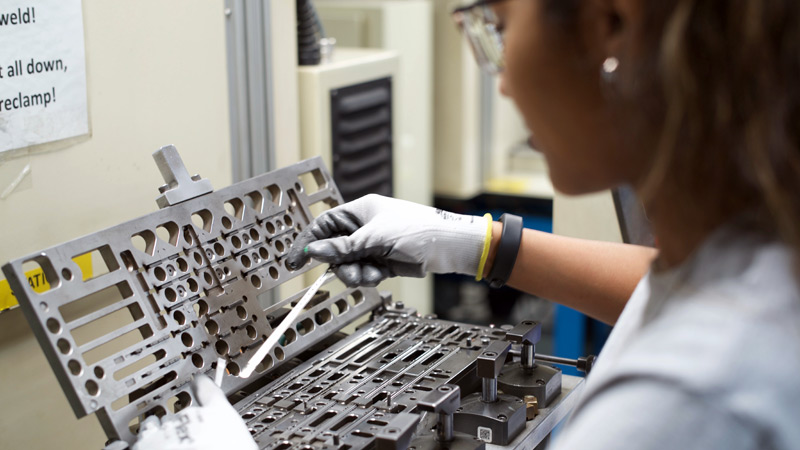
Assembly
As a Medical Technology Manufacturer, we at Brunk develop specialized work centers for any application from the ground up using our knowledge of tool making, and mechanical and systems engineering. We build highly customized workstations to handle the most challenging assemblies.
Automation
Our in-house automation team designs and builds automated machines that increases efficiency and improves the quality of our manufacturing lines. We utilize cutting edge technology to deliver highly precise automation equipment which provides an unparalleled cost advantage for our customers.
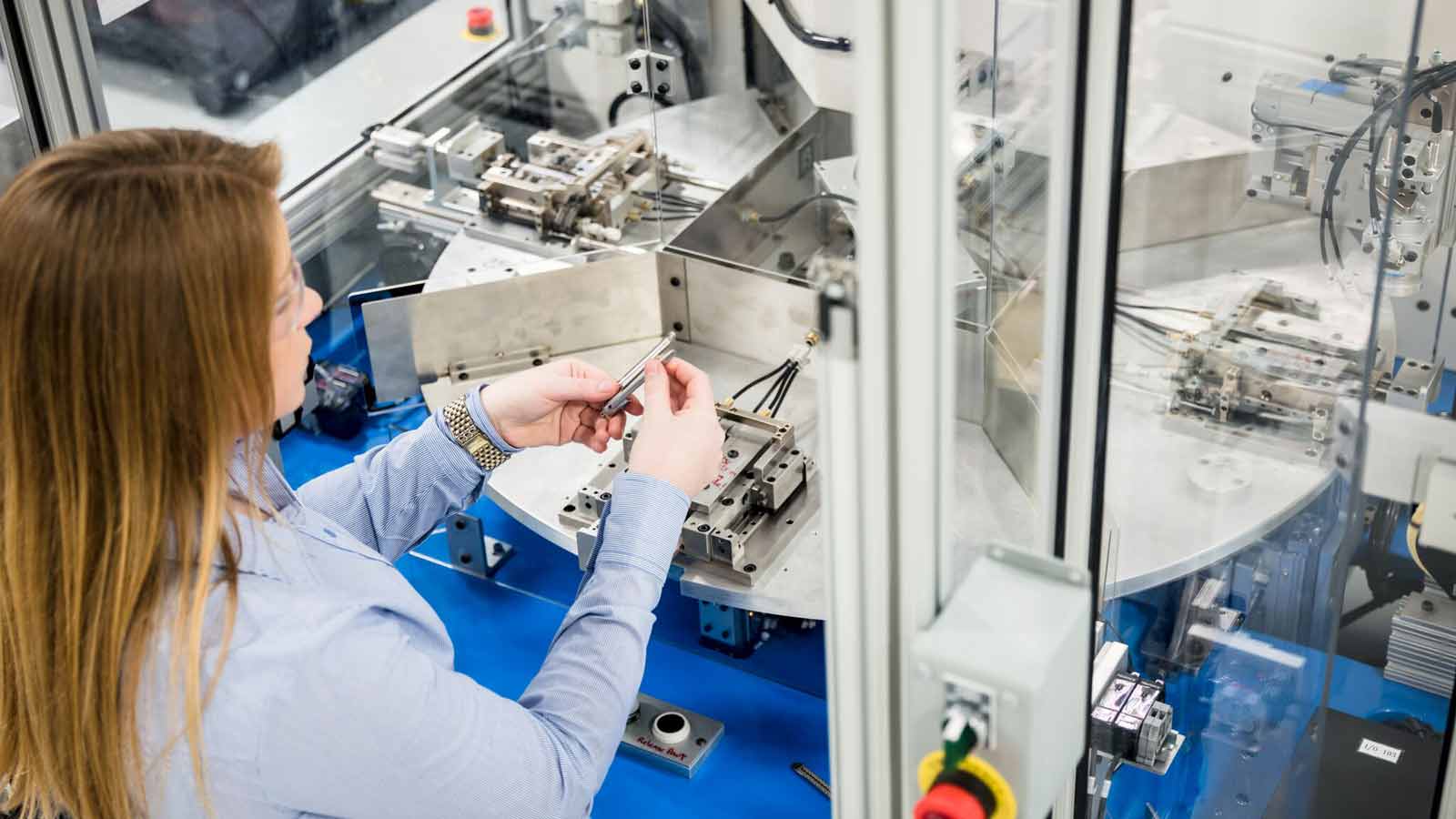
Manufacturing Automation of Medical Devices
Manufacturing automation of medical devices is reshaping how quality-critical products move from design to scaled production. On brunk.com, we focus on how integrated MedTech automation enhances precision, traceability, and throughput while supporting compliance with FDA and ISO standards. This page introduces core medical device automation concepts, quantifies benefits for device manufacturing teams, and outlines the enabling technologies—from robotic medical device assembly to in-line inspection and data-driven control. You will also find best practices for implementation, including validation and risk management, and a look ahead at trends such as AI-driven optimisation and digital twins. Whether upgrading an existing cell or planning a greenfield facility, our perspective centres on aligning precision automation investments with product quality, patient safety, and operational efficiency. Brunk is a trusted leader in manufacturing automation of medical devices and related pharmaceutical automation, delivering reliable automated processing and demonstrable value.
Understanding Manufacturing Automation
Manufacturing automation of medical devices integrates intelligent machines, deterministic control, and data-rich workflows to deliver consistent, precise production. In a field where quality and compliance are non-negotiable, medical device automation reduces variability, accelerates cycle times, and strengthens documentation. For teams scaling device manufacturing volumes while maintaining strict specifications, medtech automation becomes a strategic lever—protecting patients, shortening lead times, and optimising total cost of ownership.
Typical components include industrial and collaborative robots for medical device assembly, adhesive dispensing, and handling; programmable logic controllers (PLCs) for real-time control; machine vision for inspection and measurement; and manufacturing execution systems (MES) for production oversight. Complementary capabilities—validated software, sensor networks, and digital calibration—ensure repeatability across complex geometries and materials. At brunk.com, our approach emphasizes tightly engineered fixturing, precision automation motion control, and automated inspection that align with FDA and ISO expectations, while enabling quick changeover and continuous improvement. We also integrate stamping automation where appropriate for metal subcomponents and connect drug delivery automation steps with upstream and downstream pharmaceutical automation to maintain end-to-end traceability.
Technology connects equipment, people, and data into a closed-feedback ecosystem. Advanced analytics surface process deviations before they affect quality, and AI-enabled vision boosts defect detection without slowing throughput. Digital twins and model-based validation let teams test and refine automated processing workflows rapidly. By pairing these tools with proven automation platforms, Brunk helps manufacturers move from manual operations to scalable, compliant production environments—translating process knowledge into repeatable performance and measurable value. Our leadership in medical device automation and medtech automation ensures robust device manufacturing outcomes across cleanroom and high-throughput settings.
Benefits of Automating Medical Device Manufacturing
Automation streamlines production by delivering faster cycle times, fewer bottlenecks, and consistent throughput. Integrated precision automation motion, automated medical device assembly, and in-line testing reduce manual touchpoints that can introduce variability or slow output. Brunk solutions are built to scale, allowing programmes to ramp from pilot to full-volume device manufacturing without sacrificing repeatability or uptime. Our expertise also extends to stamping automation for precise metal features and drug delivery automation for consistent dosing mechanisms.
Quality control and compliance also improve. Closed-loop feedback, machine vision, and digital traceability provide real-time verification of critical dimensions and process parameters. With data captured at each station, manufacturers can demonstrate process validation, maintain electronic device history records, and address deviations quickly. Brunk’s platforms embed compliance-ready documentation and lot-level tracking, reinforcing audit readiness and supporting standards such as FDA regulations and ISO 13485. Our pharmaceutical automation experience strengthens controls for combination products and integrated drug delivery automation lines.
Resource optimization lowers total cost of ownership. Automated processing changeovers, predictive maintenance, and smart material handling reduce scrap, rework, and unplanned downtime. By shifting labor to higher-value activities—process engineering, continuous improvement, and oversight—organizations realize lower per-unit costs and more reliable delivery schedules. Brunk’s modular equipment and integration services help right-size capital investment, enabling incremental expansion and rapid configuration changes as product portfolios evolve. This MedTech automation approach enhances OEE while safeguarding compliance.
Types of Automation in Medical Device Manufacturing
Manufacturing automation of medical devices spans a spectrum of technologies that enhance precision, repeatability, and throughput while safeguarding compliance. Industrial robotics execute micro-assembly, dispensing, laser marking, stamping automation for subcomponents, and packaging with high accuracy. In cleanrooms, articulated and SCARA robots reduce human contact, helping control bioburden and deliver consistent quality for catheters, tubing sets, implantables, and subassemblies. Brunk integrates robotics with purpose-built end effectors and validated methods to meet ISO and FDA requirements across medical device assembly and pharmaceutical automation workflows.
Choosing between fully automated and semi-automated systems depends on product complexity, volume, and lifecycle. Fully automated lines provide high-speed output with minimal operator intervention, ideal for stable designs and sustained demand. Semi-automated cells combine human dexterity with robotic precision, offering flexibility for smaller batches, frequent design changes, or specialized assemblies. Brunk evaluates takt time, changeover needs, product risk profiles, and validation strategy to recommend the right level of medical device automation that balances cost, scalability, and documentation burden. We frequently integrate drug delivery automation and MedTech automation modules to standardize device manufacturing across families of products.
Software integration forms the backbone of modern systems, enabling monitoring, traceability, and control. MES, machine vision, and data acquisition platforms collect and analyze process data to maintain statistical control and support electronic device history records (eDHR). Brunk solutions connect equipment to central dashboards for alarms, quality checks, and performance metrics, enabling early detection of deviations and continuous improvement. With secure data flows and validated software, manufacturers gain actionable insights that strengthen compliance, yield, and overall equipment effectiveness (OEE). These capabilities underpin precision automation and automated processing across medical device assembly and pharmaceutical automation environments.
Best Practices for Implementing Automation
Implementation success starts with a clear, end-to-end assessment of current operations. Map workflows from incoming materials to final packaging, and document cycle times, bottlenecks, defect rates, and compliance checkpoints. Evaluate data integrity, equipment condition, and process variability to identify high-impact medical device automation candidates. Align objectives with regulatory expectations (e.g., FDA, ISO 13485) and define measurable KPIs for quality, throughput, and traceability. A readiness review should include IT infrastructure, MES/ERP integration capabilities, cybersecurity posture, and change-control processes to support validated transitions across device manufacturing and pharmaceutical automation lines.
When selecting technologies, prioritize modular, scalable solutions that adapt to evolving designs and demand. Look for systems that support digital traceability, in-line inspection, and electronic batch records to reinforce compliance. Consider total cost of ownership, including validation, maintenance, training, and software lifecycle management. Brunk’s precision automation for assembly and inspection is cleanroom-ready and integrates with existing quality systems, helping reduce variability while maintaining tight process control. Our portfolio spans stamping automation for repeatable metal features and drug delivery automation for combination products.
Training and change management are essential. Establish role-based training covering operation, preventive maintenance, data handling, and deviation management. Pilot lines are valuable for proving capability, refining SOPs, and generating validation evidence before broader rollout. Communicate how responsibilities and workflows will change, appoint internal champions, and pair operators with automation specialists during ramp-up. Schedule periodic retraining as software and procedures evolve. With a phased approach and robust documentation, teams can adopt medtech automation confidently while protecting product quality and compliance in both medical device assembly and pharmaceutical automation contexts.
Future Trends in Medical Device Manufacturing Automation
Artificial intelligence and machine learning are transforming manufacturing automation of medical devices by turning complex, variable processes into predictable, data-driven operations. Advanced analytics detect anomalies in real time, optimise cycle times, and forecast maintenance to minimise downtime and scrap. As models learn from production histories, they tighten tolerance control and enhance traceability—key for regulatory compliance—while accelerating validation. Brunk integrates AI-enabled monitoring within precision automation moulding and assembly lines to help customers scale with confidence, including drug delivery automation steps tied to pharmaceutical automation data streams.
Robotics and automation are progressing beyond fixed cells. Collaborative robots safely share workspaces with operators to handle delicate components, micro-assembly, and flexible kitting without extensive retooling. Vision-guided systems and force-feedback end effectors enable precise handling of tiny, biocompatible materials. Modular platforms and digital twins make it faster to simulate, commission, and adapt lines for new SKUs. Brunk leverages these advances to achieve consistent quality across high-mix and high-volume programmes, unifying medical device automation, stamping automation, and automated processing into resilient device manufacturing solutions.
Sustainability is emerging as a core design criterion. Intelligent scheduling smooths energy demand, while closed-loop control reduces material waste and rework. Data-driven quality lowers scrap rates, and packaging automation helps cut consumables. Combining energy-efficient equipment with reusable tooling and rigorous lot-level analytics, Brunk supports manufacturers pursuing lower carbon footprints without compromising throughput or compliance. Together, AI, robotics, and medtech automation practices are setting a higher bar for resilient, scalable medical device production. Brunk’s leadership in manufacturing automation of medical devices, medical device assembly, and pharmaceutical automation positions us as a trusted partner for next-generation device manufacturing.
Contact our sales team to discuss your next project.